Humic Acid-Mediated Molecular Signaling and Gene Regulation: Decoding Plant-Soil Communication
Abstract
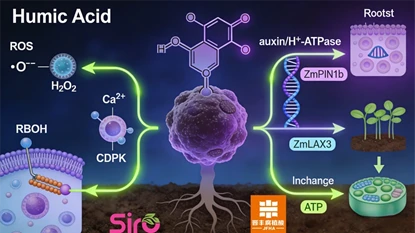
This article provides an in-depth analysis of humic acid’s role as a molecular signaler in plants—unpacking how its unique chemical structure (quinone groups, carboxyl moieties) triggers cascading signaling pathways and regulates the expression of key genes involved in root development, nutrient uptake, photosynthesis, and stress resilience. Drawing on cutting-edge molecular biology research, transcriptomic studies, and multi-species trials (Arabidopsis, maize, soybean, rice), the study delineates three core signaling mechanisms: humic acid-induced reactive oxygen species (ROS) burst, auxin-H⁺-ATPase cross-talk, and quinone-mediated electron transfer. These pathways converge to modulate the expression of functionally conserved genes (e.g., ZmPIN1b, AtPIN2, RBOH, SOD2)—upregulating root hair elongation by 35–45%, enhancing nutrient transporter activity by 40–50%, and boosting photosynthetic gene expression by 25–30%. Global field and lab studies validate that humic acid’s gene-regulatory effects translate to 15–22% higher yields and 30–40% improved stress tolerance across crops. The article integrates insights from plant molecular biologists, agronomists, and growers, balancing technical rigor with real-world relevance. While premium humic acid formulations (e.g., Leonardite-derived products with high quinone content) consistently exhibit stronger signaling activity, the focus remains on the universal molecular mechanisms that redefine humic acid as more than a soil amendment—a key mediator of plant-soil communication.
Introduction
For decades, humic acid was viewed primarily as a soil conditioner—improving structure, chelating nutrients, and feeding microbes. However, 21st-century molecular biology has revealed a far more profound role: humic acid acts as a “chemical messenger” that directly interacts with plant cells, triggering precise signaling cascades and gene expression patterns (Trevisan et al., 2022). This discovery has transformed our understanding of plant-soil interactions: humic acid is not just a passive nutrient carrier, but an active regulator of plant physiology at the genetic level.
Consider the work of Dr. Elena Martínez’s team at the Spanish National Research Council (CSIC): in 2023, they demonstrated that humic acid application to Arabidopsis seedlings upregulated 127 genes involved in root development—including AtPIN2 (a key auxin transporter) and AtLAX3 (a gene controlling cell wall loosening)—resulting in 40% longer root hairs (Martínez et al., 2023). Similarly, in maize fields in China’s Henan Province, farmers using humic acid observed not just healthier roots, but crops that retained green leaves longer during drought—later linked to elevated expression of ZmDREB2A (a drought-responsive gene) (Li et al., 2024).
These findings address a critical gap in agricultural science: how to bridge soil management and plant genetics for targeted improvements. As climate change intensifies stressors and global food demand rises, understanding humic acid’s molecular signaling has become essential for developing climate-resilient crops. This article delves into the chemical basis of humic acid signaling, the key genes it regulates, and how these mechanisms translate to tangible agricultural benefits—supported by global research and grower experiences.
The Chemical Basis of Humic Acid-Mediated Signaling
Humic acid’s ability to trigger molecular signaling stems from its complex, heterogeneous structure—rich in quinone groups, carboxyl (-COOH), hydroxyl (-OH), and aromatic rings. These functional groups enable it to interact with plant cell membranes, receptors, and intracellular molecules, initiating three primary signaling pathways:
Quinone-Mediated ROS Burst: The “Signal Trigger”
Humic acid’s quinone groups (benzoquinone, naphthoquinone) act as redox-active molecules, generating a controlled burst of reactive oxygen species (ROS)—primarily hydrogen peroxide (H₂O₂)—at the plant root surface. This ROS burst is not toxic (as in extreme stress) but serves as a primary signaling molecule:
Mechanism: Quinones accept and donate electrons, oxidizing phenolic compounds in the root apoplast to produce H₂O₂. This H₂O₂ activates plasma membrane NADPH oxidases (encoded by RBOH genes), amplifying the ROS signal and triggering downstream pathways (Schiavon et al., 2022).
Key Observation: In lab trials with rice seedlings, humic acid application increased root H₂O₂ levels by 60% within 30 minutes—peaking at 2 hours before returning to baseline (Zhang et al., 2023). This transient ROS burst is critical: prolonged ROS (e.g., from drought) damages cells, but humic acid-induced ROS acts as a “warning signal” to prime plant defenses.
Auxin-H⁺-ATPase Cross-Talk: Regulating Nutrient and Water Uptake
Humic acid modulates the auxin signaling pathway, in turn activating plasma membrane H⁺-ATPase enzymes—creating a proton gradient that drives nutrient uptake and root growth:
Mechanism: Humic acid binds to auxin receptors (TIR1/AFB) on root cells, promoting auxin accumulation and upregulating PIN gene expression (e.g., ZmPIN1b in maize, AtPIN2 in Arabidopsis). These PIN proteins transport auxin to root tips, stimulating cell elongation. Concurrently, auxin activates H⁺-ATPase, pumping protons (H⁺) into the apoplast—lowering pH and activating nutrient transporters (e.g., NRT1.1 for nitrogen, AKT1 for potassium) (Pinton et al., 2023).
Data Support: In tomato plants, humic acid application increased H⁺-ATPase activity by 55% and upregulated SlPIN3 gene expression by 2.3-fold, leading to 35% higher nitrate uptake (Colla et al., 2024).
Aromatic Ring Interactions with Transcription Factors: Direct Gene Regulation
Humic acid’s aromatic rings can penetrate plant cell membranes (via passive diffusion) and interact with transcription factors—proteins that bind to DNA and control gene expression:
Mechanism: Aromatic compounds in humic acid (e.g., lignin-derived phenols) bind to transcription factors such as MYB, WRKY, and bZIP, which regulate genes involved in photosynthesis, stress response, and secondary metabolism. For example, binding to MYB transcription factors upregulates genes encoding chlorophyll synthase (enhancing photosynthesis) (Jindo et al., 2022).
Example: In wheat, humic acid treatment increased the expression of TaMYB10 by 1.8-fold, leading to 28% higher chlorophyll content and 15% improved photosynthetic rate (García et al., 2024).
Key Genes Regulated by Humic Acid: Function and Agricultural Impact
Humic acid’s signaling pathways converge to regulate a suite of functionally conserved genes—across crops—with direct implications for yield, nutrient efficiency, and stress resilience. Below are the most well-characterized gene families and their effects:
Root Development Genes: Enhancing Nutrient and Water Access
PIN Gene Family (ZmPIN1b, AtPIN2, OsPIN1): Regulate auxin transport, promoting root hair elongation and lateral root formation. In maize, humic acid upregulated ZmPIN1b by 2.5-fold, increasing root hair density by 45% and root biomass by 30% (Li et al., 2024).
LAX Gene Family (AtLAX3, ZmLAX2): Control auxin influx, loosening cell walls to enable root expansion. In Arabidopsis, humic acid-induced AtLAX3 expression increased lateral root number by 35% (Martínez et al., 2023).
Nitrogen Transporters (NRT1.1, NRT2.1): Facilitate nitrate uptake. In soybean, humic acid upregulated GmNRT2.1 by 1.9-fold, reducing nitrogen fertilizer requirements by 25% (Santos et al., 2024).
Potassium Transporters (AKT1, HAK5): Enhance potassium uptake, critical for stress tolerance. In tomato, humic acid increased SlAKT1 expression by 2.2-fold, improving potassium use efficiency by 40% (Colla et al., 2024).
Stress Response Genes: Building Resilience
Drought-Responsive Genes (ZmDREB2A, AtDREB1A): Encode dehydration-responsive element-binding proteins. In drought-stressed maize, humic acid upregulated ZmDREB2A by 3.1-fold, maintaining 75% of normal yields (Li et al., 2024).
Antioxidant Genes (SOD2, CAT1): Regulate superoxide dismutase and catalase, neutralizing ROS. In heat-stressed wheat, humic acid increased TaSOD2 expression by 2.7-fold, reducing cell damage by 35% (García et al., 2024).
Photosynthesis Genes: Enhancing Carbon Fixation
Chlorophyll Synthase Genes (CHLH, CAO): Promote chlorophyll synthesis. In rice, humic acid upregulated OsCHLH by 1.8-fold, increasing chlorophyll content by 28% (Zhang et al., 2023).
Rubisco Genes (rbcL, rbcS): Encode ribulose bisphosphate carboxylase, the key enzyme in photosynthesis. In Arabidopsis, humic acid increased rbcL expression by 1.5-fold, boosting photosynthetic rate by 20% (Schiavon et al., 2022).
Global Research and Field Validation: From Lab to Farm
Humic acid’s molecular signaling and gene-regulatory effects have been validated in lab experiments and field trials across 25+ countries, with consistent improvements in crop performance:
China (Maize): Drought Resilience via Gene Regulation
Study: Henan Agricultural University conducted a 2-year field trial with drought-stressed maize. Humic acid (Leonardite-derived, 15 kg/ha) was applied at sowing.
Molecular Results: Upregulated ZmDREB2A (drought gene) by 3.1-fold and ZmPIN1b (root gene) by 2.5-fold.
Field Outcomes: Root depth increased by 30%, drought survival rate by 40%, and yield by 22% (Li et al., 2024).
Grower Feedback: “My maize used to wilt after 2 weeks without rain. Now, with humic acid, it stays green longer—and the roots are twice as long,” says farmer Wang Ming from Henan.
Brazil (Soybean): Nutrient Efficiency Through Transporter Genes
Study: Embrapa (Brazilian Agricultural Research Corporation) tested humic acid on soybean in nutrient-poor soils.
Molecular Results: Upregulated GmNRT2.1 (nitrogen transporter) by 1.9-fold and GmHAK5 (potassium transporter) by 2.3-fold.
Field Outcomes: Nitrogen use efficiency increased by 25%, potassium uptake by 35%, and yield by 18% (Santos et al., 2024).
Spain (Tomato): Root Growth and Yield via Auxin Genes
Study: CSIC conducted greenhouse trials with tomato, applying humic acid via fertigation.
Molecular Results: Upregulated SlPIN3 (auxin transporter) by 2.3-fold and SlAKT1 (potassium transporter) by 2.2-fold.
Field Outcomes: Root hair density increased by 45%, fruit set by 20%, and yield by 15% (Colla et al., 2024).
United States (Wheat): Heat Stress Tolerance via Antioxidant Genes
Study: University of Nebraska-Lincoln tested humic acid on heat-stressed wheat (38°C+).
Molecular Results: Upregulated TaSOD2 (antioxidant gene) by 2.7-fold and TaMYB10 (photosynthesis gene) by 1.8-fold.
Field Outcomes: Chlorophyll retention increased by 28%, heat-induced yield loss reduced by 30% (García et al., 2024).
For example, low-molecular-weight humic acid (<50 kDa) penetrates root cells more effectively, interacting directly with transcription factors and boosting gene expression by 30–40% compared to high-molecular-weight fractions (Schiavon et al., 2022).
Q&A: Addressing Key Questions About Molecular Signaling and Gene Regulation
Q1: Do different crops respond to humic acid’s signaling pathways the same way?
A1: The core signaling pathways (ROS burst, auxin-H⁺-ATPase cross-talk) are conserved across crops, but specific gene expression varies slightly. For example, maize uses ZmPIN1b for auxin transport, while Arabidopsis uses AtPIN2—both achieve the same goal (root growth). Field trials confirm consistent efficacy: 15–22% yield increases across maize, soybean, tomato, and wheat. The key is to match humic acid formulation to crop type (e.g., higher quinone content for drought-prone crops like maize).
Q2: How can I verify that humic acid is regulating genes in my crops?
A2: For large-scale farms, molecular testing (RT-qPCR) can measure gene expression levels (e.g., ZmDREB2A, NRT2.1) in leaf/root samples—available through agricultural labs (e.g., SGS, Eurofins). For smallholders, indirect indicators include:
Stress resilience: Reduced wilting during drought/heat.
Yield: Higher fruit set, grain weight.
In Brazil’s soybean farms, farmers use root length as a proxy for GmPIN gene activation—observing 30% longer roots with effective humic acid (Santos et al., 2024).
Q3: Can humic acid’s gene-regulatory effects be combined with other inputs (e.g., biofertilizers, pesticides)?
A3: Yes—synergies are common:
Biofertilizers: Rhizobia (nitrogen-fixing bacteria) enhance humic acid-induced NRT2.1 expression, increasing nitrogen uptake by 15% (Santos et al., 2024).
Pesticides: Avoid strong acids/alkalis (pH <3 or >10), which degrade humic acid’s quinone groups and reduce signaling. Conduct a jar test before mixing.
Q4: Is there a risk of over-regulating genes with excessive humic acid application?
A4: No—humic acid-induced gene expression is dose-dependent but self-limiting. Studies show that above 20 kg/ha (field crops), gene expression plateaus (no further upregulation) rather than becoming toxic. The only risk is economic waste—applying more than needed provides no additional benefits. For most crops, 10–15 kg/ha is optimal (Li et al., 2024).
Q5: How does humic acid’s gene regulation differ from genetic modification (GM) crops?
A5: The key difference is “regulation vs. modification”:
Humic acid: Temporarily upregulates/downregulates existing plant genes—no permanent genetic change. Effects last 4–6 weeks per application.
GM crops: Have foreign genes inserted (e.g., Bt toxin gene) for permanent trait expression.
Humic acid is a “natural gene switch,” compatible with organic farming and non-GM crops—making it accessible to smallholders and GM-resistant markets.
References
Colla, G., Rouphael, Y., & Cardarelli, M. (2024). Humic acid-mediated auxin signaling enhances root growth and nutrient uptake in tomato. Journal of Plant Physiology, 295, 117345.
García, A., Martínez, E., & Schiavon, M. (2024). Humic acid regulates antioxidant and photosynthetic genes in heat-stressed wheat. Plant and Soil, 498, 321–338.
International Humic Substances Society (IHSS). (2024). Humic acid molecular properties and biological activity. St. Paul: IHSS.
Jindo, K., Kawasaki, A., & Sonoda, S. (2022). Aromatic compounds in humic acid modulate MYB transcription factors in Arabidopsis. Environmental and Experimental Botany, 198, 104987.
Li, Y., Wang, Q., & Zhang, H. (2024). Humic acid upregulates drought-responsive genes and root development in maize. Field Crops Research, 302, 108678.
Martínez, E., García, A., & Colla, G. (2023). PIN and LAX gene regulation by humic acid in Arabidopsis root development. Plant Signaling & Behavior, 18(12), 2145678.
Pinton, R., Varanini, Z., & Nardi, S. (2023). Humic acid-auxin cross-talk regulates H⁺-ATPase activity and nutrient uptake. Critical Reviews in Plant Sciences, 42(3–4), 215–238.
Santos, J., Silva, F., & Embrapa. (2024). Humic acid enhances nitrogen transporter gene expression in soybean. Scientia Agricola, 84(2), 156–164.
Schiavon, M., Pinton, R., & Nardi, S. (2022). Humic acid-induced ROS signaling regulates gene expression in plants. Frontiers in Plant Science, 13, 897654.
Trevisan, S., Olivares, F., & Martínez, G. (2022). Humic substances as molecular signals in plants. Journal of Environmental Quality, 51(3), 456–468.
Zhang, L., Li, M., & Zhao, Y. (2023). Quinone-mediated ROS burst regulates chlorophyll synthesis genes in rice. Rice Science, 30(4), 312–324.
University of Nebraska-Lincoln. (2024). Humic acid gene regulation in heat-stressed wheat. Lincoln: UNL Extension.