Animal vs. Plant Amino Acid Fertilizers: Decoding the Price Gap & Why SIRO AMINO Chose a Different Path
Hey folks, let’s talk about something that confuses a lot of growers: amino acid fertilizers. You walk into the market, and you see “animal-source” and “plant-source” options with a wild price difference—sometimes 30% to 50%. What’s really behind that gap? Is the expensive one always better?
Having spent years in this field, from factory floors to muddy fields, I want to break down the real-world differences, not just the textbook definitions. And I’ll be frank about why our brand, SIRO AMINO, had to forge its own path to solve the industry’s pain points.
The Raw Truth: What Goes Into These Fertilizers?
This isn’t just about ingredients; it’s about origin stories that define safety and cost from the very start.
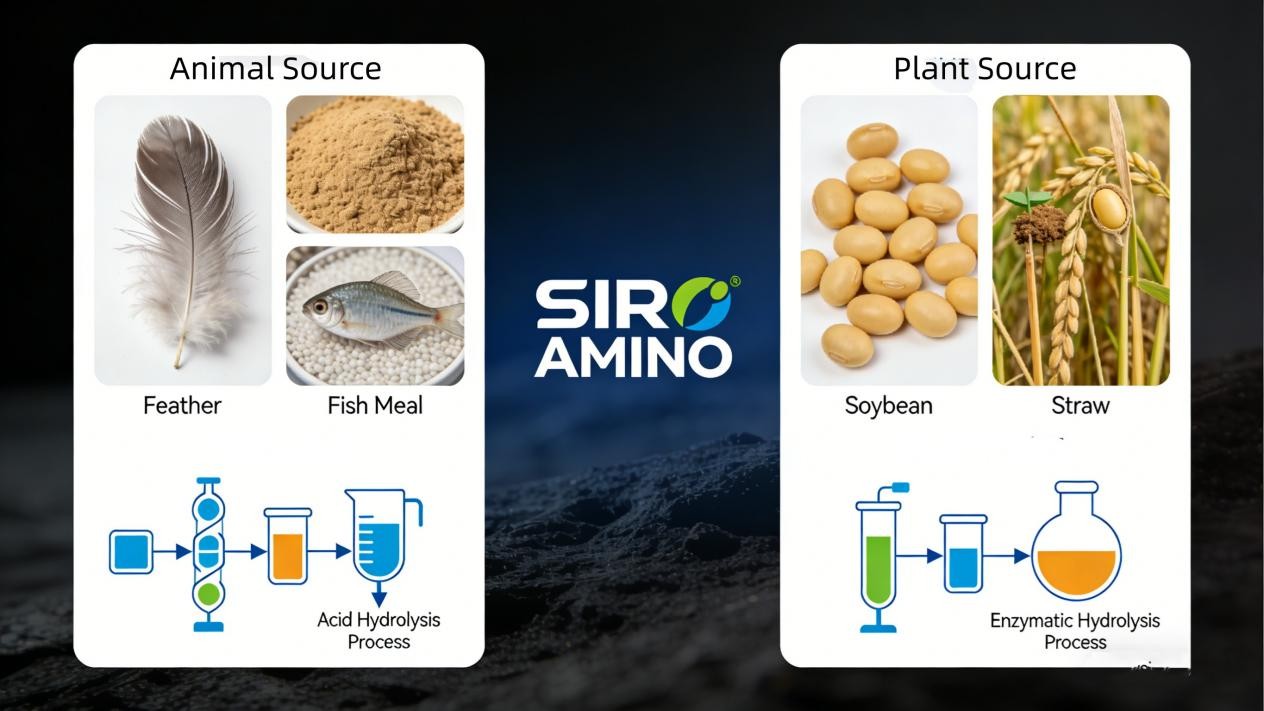
Animal-Source: The “Fast & Efficient” Route
Most animal-source fertilizers are byproducts of other industries. Think pig hair, poultry feathers, horns, hoofs, fish meal, and blood meal. They’re abundant and inexpensive to source.
The Production “Hack”: The dominant method is acid hydrolysis. It’s like industrial pressure cooking: raw materials are cooked in strong sulfuric or hydrochloric acid at high temperatures (110-120°C) for hours. It’s fast, efficient, and breaks down the tough proteins. But here’s the catch I’ve seen in lab reports: this harsh process can leave behind chloride ion residues and poses a risk of heavy metal carryover. The smell? Let’s just say it’s distinct.
Plant-Source: The “Gentle & Clean” Approach
These come from renewable plant proteins: soybean meal, corn gluten, rapeseed meal, or even processed agricultural waste.
The Precision Method: The gold standard here is enzymatic hydrolysis. Imagine using precise molecular “scissors” (enzymes) to carefully snip plant proteins into amino acids under mild, controlled conditions. It preserves more beneficial compounds (like certain polyphenols) and avoids harmful residues. But it’s a slower, more finicky, and more expensive process. Those specialized enzymes cost a pretty penny.
Why the Price Tag Tells a Story
The price difference isn’t arbitrary. It’s a direct reflection of four key factors:
The Bill for Ingredients: Top-tier plant protein meals simply cost more per ton than most animal by-products. Add the premium for complex enzymes, and your base cost is already higher.
The Cost of Being Gentle: Acid hydrolysis is a rugged, low-tech workhorse. Enzymatic hydrolysis is like a sensitive lab experiment—it needs precise control over temperature, pH, and time, demanding better equipment and more energy/environmental management.
What You Actually Get: This is the crux. Many animal-source products can be a bit of a “black box” with inconsistent amino acid profiles and potential contaminant worries. Plant-source products offer a cleaner, more complete amino acid spectrum and higher biological activity. You’re paying for predictable quality and safety, especially crucial for high-value cash crops, vineyards, or organic operations.
Market Pull: The global shift towards green and sustainable agriculture isn’t just a trend; it’s creating real demand and policy support for cleaner plant-based inputs. Animal-source products often get squeezed into the commodity, price-war end of the market.
Our Dilemma & The SIRO AMINO Solution
We saw this divide clearly. Many growers wanted the safety and quality of plant-source but needed a more realistic price. Others used animal-source products but worried about chloride sensitivity in crops like tomatoes or berries.
We couldn’t in good conscience just pick a side. So, we developed a hybrid solution.
Here’s what makes SIRO AMINO different:
We Combined the Best of Both Processes: Our composite enzymatic-acid hydrolysis technology is our core innovation. We start with the gentle, precise enzyme “scissors” to get the majority of high-quality amino acids. Then, a final, mild and meticulously controlled acid step ensures we break down the stubborn bits for a complete profile. This avoids chloride residue, maintains over 40% amino acid content, and brings down the cost compared to pure enzymatic hydrolysis.
Ruthless Sourcing, Not Just Cheap Sourcing: We use premium, low-contaminant plant proteins and selectively source only the cleanest animal by-products. Every batch is tested. Our heavy metals are far below the limits of NY 1429-2010. This means SIRO AMINO is safe for all crops, even the most chloride-sensitive ones.
Real-World Cost-Effectiveness: By optimizing this hybrid process and controlling our supply chain, we bridged the price gap. SIRO AMINO is typically only 10-20% more than standard animal-source fertilizers, yet delivers quality on par with premium plant-source options. It’s the balance we were looking for.
It’s Not Just a Product, It’s a Partnership: We don’t believe in one-size-fits-all. Based on your crop, soil, and region, we can help tailor formulations. Our users typically see a 20-30% improvement in nutrient use efficiency compared to traditional products, which means real savings on your total input costs.
Choosing SIRO AMINO is choosing to step out of that old “animal vs. plant” dichotomy. It’s a vote for a third way: scientifically advanced, practically priced, and fundamentally safe.
FAQ: Your Questions, Answered Plainly
Q: “So, which should I use for my field crops vs. my greenhouse veggies?” A: Traditionally, animal-source is common for broad-acre crops where price is king. Pure plant-source is often chosen for sensitive high-value crops. SIRO AMINO is designed to be the single solution for both. Its safety profile makes it versatile, so you don’t need to switch products or worry.
Q: “How can you be more cost-effective if your process is more complex?” A: Great question. Think of it like vertical integration. By owning and refining our hybrid process and sourcing directly, we cut out cost layers that other brands add. We invest the savings back into the product’s quality. You get the efficiency without the middleman markup.
Q: “Does this meet international organic standards?” A: Absolutely. SIRO AMINO is formulated to comply with stringent international standards for organic inputs (like OMRI where applicable). Our Certificates of Analysis for heavy metals and chlorides are always available, making cross-border shipment and compliance straightforward.
References & Further Reading
(Sources that informed this overview, including the latest industry analyses.)
Fertilizer Information Center. (2025). Amino Acid Water-Soluble Fertilizer: Formula, Production Process and Technical Analysis.
Agriculture Technology Research Institute. (2025). From Animal Hairs to Plant Protein: A Complete Analysis of 3 Main Amino Acid Raw Material Sources.
Dora Agri. (2025). Animal Source Amino Acids VS Plant Source Amino Acids.
Greenforbio. (2025). Amino Acid Fertilizer For Plants 40%.