


If you’ve been hanging around the organic farming world lately, you’ve probably heard people buzzing about humic acid. It’s often called “black gold,” and for good reason! But when you’re running a certified organic operation, you can’t just throw any “black liquid” on your fields. You need to know: Is it legal? And does it actually work?
Let’s dig into why organic humic acid is a game-changer for your soil and how to make sure your inspector stays happy.
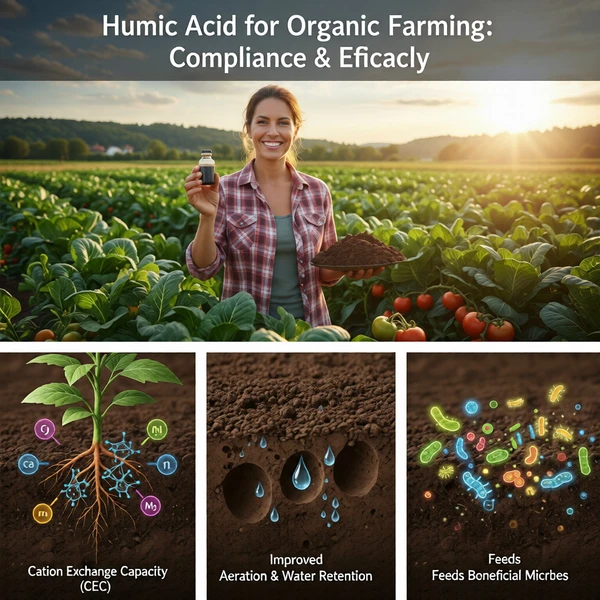
Think of humic acid in organic agriculture as the “soul” of healthy soil. It’s a natural concentrate of decayed organic matter (mostly from ancient Leonardite) that has broken down over millions of years. It isn’t a fertilizer in the traditional sense—it doesn’t just “feed” the plant; it “unlocks” the soil.
In the world of organic certs, compliance is king. To keep your USDA Organic seal, your humic acid must be extracted correctly.
According to the USDA National Organic Program (NOP) 7 CFR § 205.601, humic acids are allowed as synthetic substances for use in organic crop production, provided they are extracted using non-synthetic substances or specific alkaline extractants (like Potassium Hydroxide).
Pro Tip: Always look for the OMRI Listed seal. It’s the gold standard for ensuring your organic soil amendment won’t get you a “non-compliance” headache during audit season.
The efficacy of humic acid isn’t just folklore; it’s chemistry. Here is why it’s the ultimate eco-friendly fertilizer companion:
At the end of the day, we want high-quality harvests. Studies, such as those found in the Journal of Plant Nutrition, have shown that applying humic acid can lead to higher “Brix” levels (sugar content) in fruits and vegetables, meaning better taste and longer shelf life for your customers.
Q: Can I use humic acid as a foliar spray? A: Absolutely! While it’s great for the soil, a diluted foliar spray can help plants absorb micronutrients directly through their leaves, especially during high-stress growth phases.
Q: Does humic acid replace compost? A: Think of them as partners. Compost provides the bulk organic matter, while humic acid provides the concentrated “active ingredients.” Using both is the ultimate power move for your soil.
Q: Is it safe for the environment? A: Yes! It is a 100% eco-friendly fertilizer component. It actually helps the environment by reducing nutrient runoff into local waterways.
Q: How often should I apply it? A: Most farmers see the best results with a “little and often” approach—applying it at planting and then again during key growth spurts.
Whether you’re looking to improve your organic crop quality or just want to build a more resilient farm, organic humic acid is a must-have tool. It’s compliant, it’s effective, and it’s one of the best ways to invest in the long-term health of your land.


