


If you’ve been hanging around gardening circles or professional farming forums lately, you’ve likely heard the buzz about humic acid. Often called “black gold,” this organic powerhouse isn’t exactly a fertilizer—it’s a biological supercharger.
But here’s the thing: having a bottle of humic acid is one thing; knowing how to use humic acid for plants effectively is another. Whether you’re managing a backyard tomato patch or a 100-acre cornfield, this guide will walk you through the “how, when, and how much” of humic application.
Think of humic acid as a “delivery truck” for nutrients. It’s a complex molecule derived from decayed organic matter (usually Leonardite). Its primary job is chelation—grabbing onto minerals in the soil and delivering them directly to the plant’s roots. According to research published in Frontiers in Plant Science, humic substances significantly improve root growth and nutrient uptake efficiency.
The most common mistake is thinking “more is better.” Because humic acid is highly concentrated, a little goes a long way.
Timing is everything. You want the humic acid to be present when the “action” is happening in the soil.
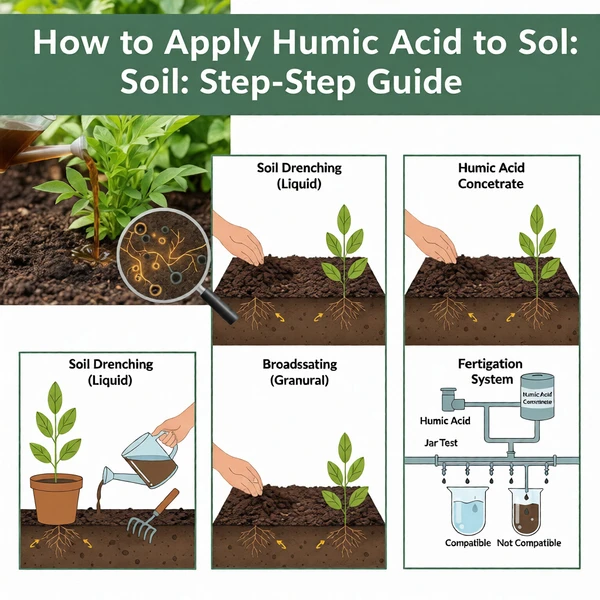
Depending on your equipment and the size of your garden, you have several options:
This is the gold standard for immediate results. You simply mix the liquid concentrate with water and pour it at the base of the plant. This ensures the humates reach the “rhizosphere” (the area directly around the roots) immediately.
Ideal for lawns or preparing garden beds. You spread the granules across the surface and lightly rake or till them into the top 2-3 inches of soil. Water the area immediately after to help the granules begin dissolving.
If you use a drip irrigation system, fertigation (fertilizing via irrigation) is incredibly efficient.
Using humic acid isn’t just about this year’s harvest; it’s a long-term investment.
Studies in the Journal of Plant Nutrition have shown that humic acid can increase the bioavailability of micronutrients like Iron and Zinc, which are often “locked” in the soil.
Q: Can I over-apply humic acid? A: Yes. While it’s organic, excessive amounts can temporarily “tie up” certain nutrients or cause an imbalance in soil biology. Always stick to the recommended humic acid application rate on the product label.
Q: Can I mix humic acid with my regular fertilizer? A: Absolutely! In fact, it’s recommended. Humic acid makes your nitrogen and phosphorus fertilizers more efficient, meaning you can often use less fertilizer while getting the same results.
Q: Is it safe for pets and kids? A: High-quality humic acid is generally non-toxic and derived from natural sources. However, it’s always best to let the liquid dry or the granules settle after watering before letting pets play in the area.
Q: Does it expire? A: Liquid humic acid has a shelf life of about 2 years if kept out of direct sunlight and extreme cold. Granular versions can last almost indefinitely if kept dry.
Transitioning to a more organic-focused garden or farm doesn’t have to be complicated. By following this soil amendment guide, you’re moving away from “feeding the plant” and toward “feeding the soil.”
Ready to try it? Start with a pre-sowing drench this spring and watch your plants thrive like never before!


