


If you’ve been scrolling through wellness forums lately, you might have heard people talking about drinking “black water” or taking “dirt supplements.” It sounds a bit strange, but we’re actually talking about humic acid—a powerful, organic compound formed from deeply decomposed ancient plant matter.
Think of it as the “Black Gold” of the wellness world. Here is why it’s trending and how you can get it into your routine.
Why are we so obsessed with this dark substance? It all comes down to two main pillars: gut microbiota and intestinal integrity.
Modern life—processed foods, stress, and environmental toxins—can punch “holes” in our gut lining (often called Leaky Gut). A high-quality humic extract for gut health acts like a sealant. It supports the “tight junctions” in your intestinal wall, ensuring that nutrients get into your bloodstream while keeping toxins out.
Furthermore, research suggests that humic substances act as a unique prebiotic, fostering a more diverse and resilient microbial neighborhood in your belly.
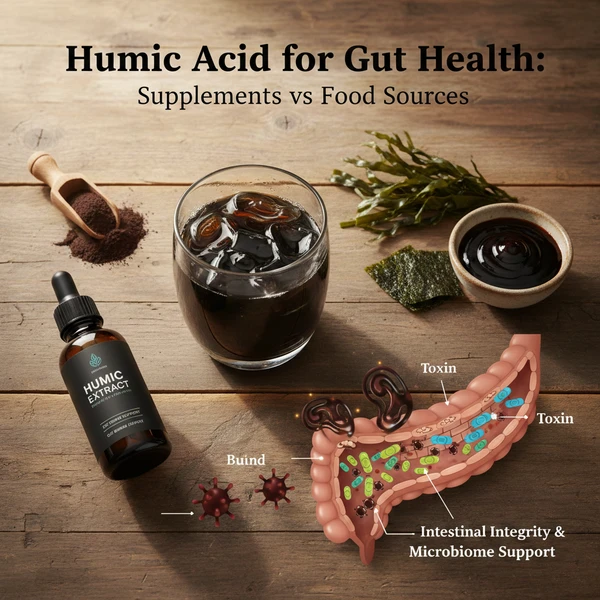
If you decide to try a humic acid supplement, you’ll likely face the “Powder vs. Liquid” dilemma. Here’s the breakdown:
Pro Tip: If you have a sensitive stomach, start with the liquid form—it’s generally easier for your body to process initially.
Ideally, we should get everything from our food. However, there’s a catch: modern industrial farming has depleted our soil of these rich organic compounds. To get enough to move the needle on your intestinal integrity, you’d have to look at specific sources:
When it comes to dosage guidelines, “low and slow” is the golden rule.
Safety Check: Always ensure your supplement is “Third-Party Tested.” Because humic acid comes from the earth, you want to be 100% sure it’s free from heavy metals like lead or arsenic. Reference: NCBI on Safety of Humic Substances.
Not exactly. They are sisters! Humic acid is a larger molecule that works primarily in the gut, while fulvic acid is smaller and better at entering cells to deliver nutrients. Most high-quality supplements contain a blend of both.
Since humic acid is great at “binding” to things (which is how it detoxes), it might bind to your medication, too. Always wait at least 2 hours between taking humic acid and any prescription meds.
If it’s a high-quality liquid extract, it usually tastes like… well, nothing! Powders might have a very faint “earthy” vibe, but it’s easily masked by a protein shake or your morning coffee.
Whether you choose a liquid humic acid supplement or decide to sprinkle more seaweed into your diet, your gut will thank you for the extra support.


