


If you’ve ever accidentally spilled a little too much synthetic nitrogen on your lawn, you know the heart-sinking feeling of watching your grass turn a crispy, “burned” brown just days later. It’s no wonder that many growers ask the same nervous question when switching to organic soil conditioners: “Can I overapply humic acid?”
Whether you are using raw humic substances or popular blends like HumiChar, let’s dive into the science of safety, dosage, and why “more” isn’t always “better.”
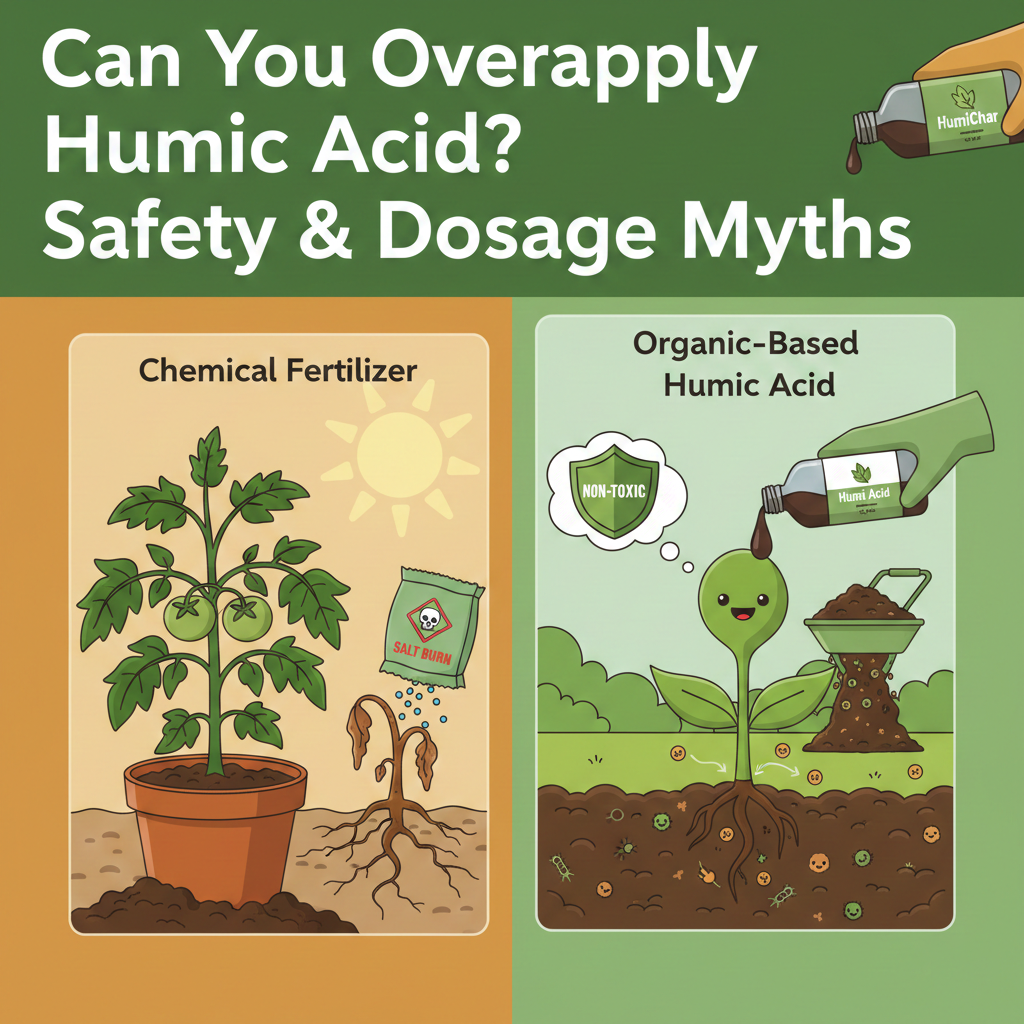
First, breathe a sigh of relief. Unlike chemical fertilizers, which are high-salt concentrates that can dehydrate plant tissues (the “burn”), organic-based humic acid is inherently non-toxic.
Humic acid isn’t a fertilizer in the traditional sense; it’s a soil conditioner. Research published in Scientific Reports highlights that humic substances work by improving soil structure and enhancing nutrient uptake rather than forcing high doses of minerals into the plant. Because it is a natural component of stable organic matter, humic acid safety is incredibly high. You won’t kill your plants by being a little heavy-handed.
If it’s non-toxic, why not just dump the whole bag? While you won’t “poison” your garden, there are a few humic acid side effects—though they are more about efficiency than destruction.
This is where the real “risk” lies: your wallet. The goal of sustainable gardening is optimal dosage. Applying 10x the recommended amount won’t give you 10x the yield. In fact, a study on humic acid application levels suggests that medium doses often outperform high doses in stimulating root growth (Source: Frontiers in Plant Science).
To maintain cost-effectiveness, think of humic acid like a vitamin supplement. Your body (or your soil) needs a specific amount to function at its peak; anything extra is simply wasted and washed away.
Q: Can I use humic acid every time I water? A: You can, but it’s unnecessary. For most lawns and gardens, a monthly application during the growing season is plenty to maintain soil health.
Q: Will humic acid stain my sidewalk? A: Yes! Because it is highly concentrated organic matter (essentially liquid compost), it can leave dark brown stains on concrete. Always rinse off hardscapes after application.
Q: Is it safe for pets and kids? A: Generally, yes. Since it is organic-based and non-toxic, it is much safer than traditional lawn chemicals. However, always check your specific product label for any added synthetic nutrients.
Q: Can I mix it with other fertilizers? A: Absolutely. Humic acid actually makes your other fertilizers work harder by preventing nutrient leaching.
You don’t need to panic if the cap falls off and you spill extra humic acid on your prize roses. It won’t burn them. But to be a truly “green” thumb, focus on the optimal dosage. Not only will your soil stay in perfect balance, but you’ll save money in the process.


